
Continuous security and compliance for the agentic coding era
Use AI-assisted detection and remediation guidance alongside policy-as-code enforcement across the CI/CD. CloudBees Unify is one governance layer across every pipeline, every tool, and every AI-generated commit so your teams adopt AI at full speed, with full control.
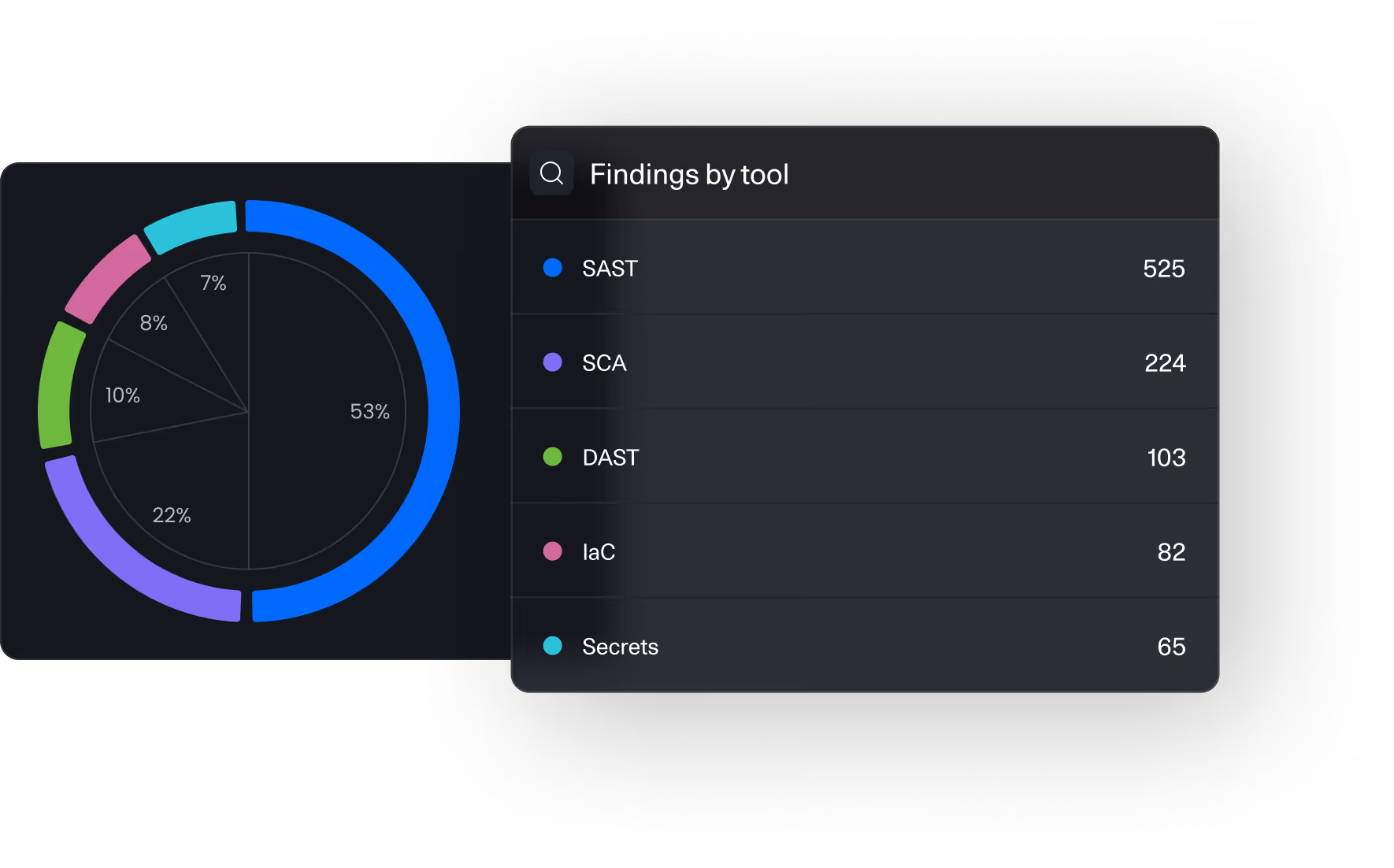

AI adoption is outpacing delivery governance, becoming your burden.
AI is generating 61% of the average codebase and the governance infrastructure most teams rely on was built for the volume humans produce. Fragmented scanners see their slice. Siloed policy gates stop at the tool edge. Manual compliance prep doesn't scale. When something slips through - a vulnerable dependency accepted from an AI tool, a misconfigured container that passed the IaC scan but failed in production - it lands as a fire drill, not a managed risk. The answer isn't to slow AI adoption. It's to govern it properly.
Without unified security and governance:
- AI-generated commits introduce vulnerabilities scanners miss
- Scanner noise drowns actionable signal, which is ignored
- Policy stops at each tool's edge; the gaps between tools go ungoverned
- Compliance evidence is assembled manually, under audit pressure
- AI velocity increases while human oversight stays the same
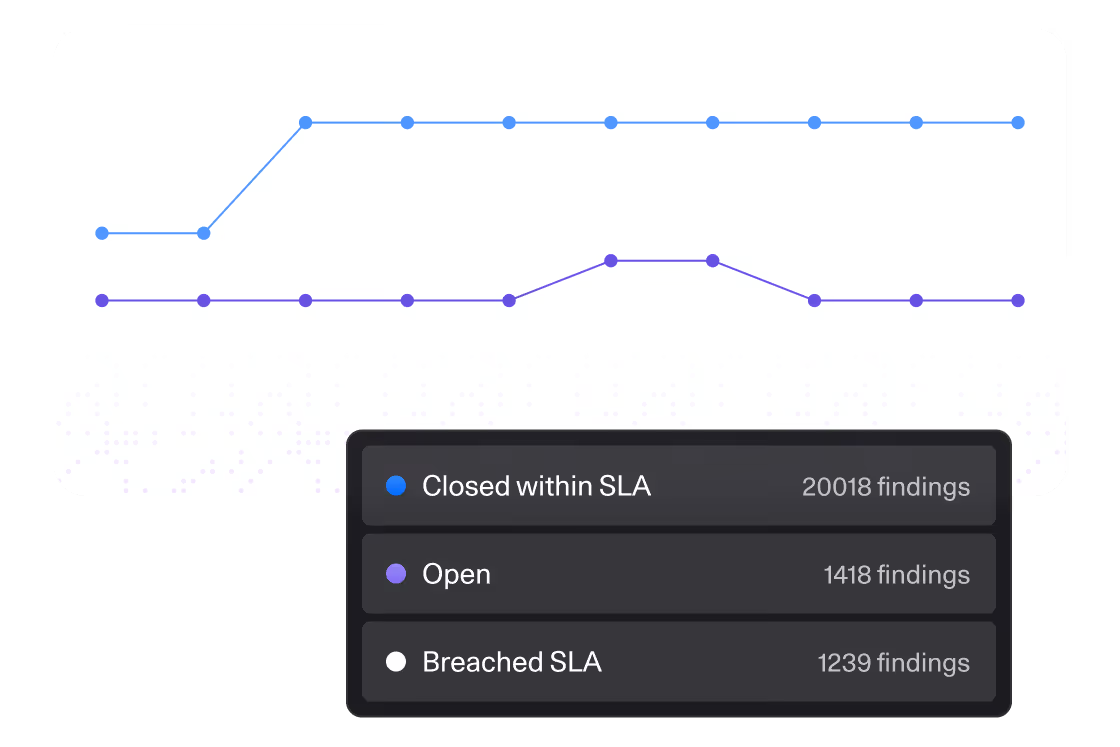
Governed AI software delivery: built in, not bolted on
CloudBees Unify standardizes security controls with prebuilt integrations and policy enforcement across every pipeline, so teams scale guardrails without writing custom pipeline code.
Make every AI-approved merge governable and traceable
AI tools are already in your pipelines, the question is whether your governance infrastructure can keep up. A vulnerable dependency accepted from an AI suggestion, missed by your SCM and CI, won't surface until Friday's scan, by then it's in three services. CloudBees Unify correlates signals across your SCM, CI, scanners, and deploy tools so every AI-approved merge is visible, traceable, and governed under the same policy framework as every human commit.

Security that doesn't make developers slow down
Findings developers ignore aren't improving your security posture, they're just noise. The problem isn't scanner coverage, it's context: stale thresholds, findings that arrive after the work is done, alerts in a portal nobody checks. CloudBees Unify surfaces deduplicated, prioritized findings where developers work, triggered by real pipeline events, with the context needed to act. Faster feedback, less noise, security that accelerates delivery instead of blocking it.

Human oversight for regulated industries
AI moves fast. Auditors, regulators, and your board do not. For regulated industries, the question isn't whether to adopt AI, it's whether you can demonstrate humans remain in control of what ships. CloudBees Unify is built on earned autonomy: AI guides first, humans approve, and every action is traceable to a policy, a decision, and an accountable individual. The governance that satisfies your auditors today governs your AI agents tomorrow.

Governance above your tools, not inside each one
Scanner-centric DevSecOps has a ceiling, add more scanners and governance still stops at each tool's edge. The Jenkins pipeline your CD tool can't see, the deploy outside the scanner's environment, the feature flag change after the SAST scan, these aren't edge cases, they're normal enterprise delivery. Unify's policy engine sits above your tools: define once, enforce across every pipeline, every environment, and every AI action without requiring teams to change how they work.

Real-time visibility across pipelines, not just scanners
Disconnected dashboards are a reporting problem dressed up as a security solution, none of them tell you whether you're safe to ship right now. CloudBees Unify consolidates security findings, policy status, and compliance signals across every pipeline in real time: security leaders see full delivery surface exposure, engineering leaders see release readiness with security context, and executives get a defensible answer to "are we in control?"


Reduce delivery risk while accelerating compliant releases
Up to
$1.5m
Potential savings for 10 apps per year
Up to
22k
Houra saved
Time-to-market
40%
Faster for orgs using DevSecOps
Ship faster without sacrificing security with standardized policies and visibility across every pipeline

Automated, event-based security scanning
CloudBees automatically orchestrates SAST, SCA, IaC, container, and secrets scans based on real pipeline and code events, not fixed schedules. Consistent coverage from commit to deploy, without hard-coding scanners into every pipeline or adding manual steps to every release process.

Centralized policy-as-code enforcement
Security and compliance policies are defined centrally and enforced consistently across all pipelines, teams, and CI tools, eliminating drift while allowing developers to keep their existing workflows. Policies survive your next tool decision because they live above the tools, not inside them.

Intelligent vulnerability triage & prioritization
CloudBees normalizes, deduplicates, and prioritizes findings across scanners, surfacing the most critical risks first and reducing the false positives that erode developer trust and slow remediation. Actionable signal, not noise.

Audit-ready evidence & compliance traceability
Every scan, approval, policy decision, and release is captured automatically, creating a real-time audit-ready record across applications, releases, and environments. No manual reporting. No spreadsheets. The compliance evidence your auditors need is generated as a byproduct of delivery, not assembled under pressure.

Real-time security & compliance visibility
Unified dashboards provide real-time insight into vulnerabilities, policy compliance, SLAs, and release readiness across the SDLC — giving security leaders and engineering leaders a single source of truth, updated continuously.
Trusted by enterprises,
loved by developers

Salesforce migrates DevOps to the cloud with CloudBees CI
Salesforce moved software development to CloudBees CI on Amazon EKS, improving productivity, security, and supporting the continuous delivery of innovative solutions on the Salesforce platform.

Autodesk builds better software faster with CloudBees
Standardize on CloudBees CI, making secure, automated CI/CD pipelines available to a development organization of 4,000 engineers

Acquia partners with CloudBees to simplify and scale DevOps
Acquia, partnered with CloudBees to unify over 16 siloed Jenkins instances into a single, secure CI/CD solution, enhancing operational efficiency of digital experiences.

American Express CBT gains competitive advantage with CI/CD
American Express Global Business Travel won the 2019 CloudBees Innovation Award for CI/CD Automation Excellence based on its DevOps transformation.

Scale your DevSecOps with CloudBees security and compliance
CloudBees Unify gives your teams the governance layer that makes confident AI adoption possible not a reason to slow it down. Same tools. Same teams. No migration.


